
Projects
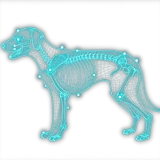
Pet Health
AI-powered dog gait analysis from a phone video

TappyToons
A safe screen for kids on Android
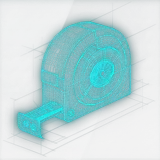
AR Ruler
A 3D tape measure, compass, and bubble level in one app

JivoKnowledge
A reference site for the Jivo widget API, with live in-browser demos

PDF ⇄ Document
A PDF/TXT/DOCX/HTML/MD converter that runs entirely in your browser — no file ever gets uploaded

CustomCRM
A boxed CRM personalized for you and your needs
AI-powered dog gait analysis from a phone video
From a poolside chat to an AI dog health monitoring system
One day, sitting by the pool with a neighbor, we were talking about technologies that already exist today but would have seemed impossible twenty years ago. An idea came up in the conversation: could an ordinary smartphone camera gather enough information to help assess someone's — or something's — health? Animals, dogs in particular, seemed like the obvious first direction. A few days later I came back to that conversation and decided to check whether such technology already existed, and how realistic it would be to analyze an animal's condition from video.
That research led me to DeepLabCut, a framework for automatically tracking movement and body-part position. I studied research papers and real-world applications of it, dug into computer vision, picked out several local neural network models, put together a specialized veterinary knowledge base, and combined all of it into a single intelligent pipeline.
How it works
That's how the mobile app for monitoring dogs' health came to be. If a dog's gait seems to have changed, the owner records a short video and sends it off for analysis: the system tracks key points on the animal's body and studies its movement frame by frame, trying to catch even small changes that are easy to miss with the naked eye. The resulting data turns into measurable parameters and gets checked against a specialized knowledge base — several AI models jointly produce a probabilistic assessment of the dog's condition and help decide whether it's worth seeing a vet.
The app also keeps a health log for the dog: if a vet has already made a diagnosis, the owner can regularly record readings and track how things change over time. A separate part of the system is an AI consultant, fine-tuned on a specialized veterinary knowledge base: it answers questions about dog care and helps interpret observations in a convenient chat format.
Built to run on its own
All the complex logic lives on the server — the mobile app stays a simple interface with analysis results, charts, and observation history. At the same time, the platform runs autonomously and doesn't depend on external AI APIs: under the hood are several of my own, locally deployed neural network models for computer vision, motion analysis, and the consultant, which keeps the whole data pipeline under my control and independent of third-party services.
Along the way I had to pick up the basics of veterinary anatomy, biomechanics, and how a dog's movement gets evaluated. But the project's main difficulty is technical: reliably processing video, correctly recognizing pose, precisely extracting motion parameters, and interpreting the results soundly.
Where it stands today
At this stage the project is complete visually and functionally: the mobile app, the server-side video-processing pipeline, the computer vision models, the gait analysis system, the medical knowledge base, and the AI consultant are all built and integrated. The focus is now shifting from building infrastructure to fine-tuning the models and testing the system on real-world data.
What's next
The next step is full validation of the results together with veterinary specialists: measuring the accuracy and reproducibility of the analysis, comparing the system's conclusions against a professional assessment, and understanding in which scenarios the product is genuinely useful.
What this could mean — and what it won't replace
A tool like this could help a lot of dog owners. It doesn't replace a vet, but it can help notice changes in a pet's movement earlier, track its condition systematically, and make a more informed decision about seeing a specialist.
The open question: is there real demand
For the project's further development to make sense, I need to confirm not just that the idea is useful, but that there's real demand for it — how often owners actually run into this problem, and whether they'd be willing to use a tool like this. Right now I'm studying market analysis methods and ways to validate product hypotheses; the results will decide the project's future.
Even if the project stays a complex side experiment worth around 300 hours of work, it's already given me exactly what made it worth doing: hands-on experience with computer vision, local neural networks, and medical data at the level of a real product. And if the research confirms demand, this prototype is ready to become the foundation of a service I could proudly offer to dog owners.
Watch Video